· 3 min read
What is Server Side Conversion Tracking and How Does It Work?
On this page
- Key Takeaways
- Benefits of Switching to Server-Side Tracking
- Understanding Cookie-Based Tracking Limitations
- How Server-Side Tracking Works
- Implementing Server-Side Tracking
- Step 1: Passing the Click ID to the Landing Page
- Step 2: Storing the Click in a First-Party Cookie or Database
- Step 3: Triggering the Conversion Event
- Step 4: Triggering the Postback to a Publisher
- Step 5: Manual Testing
- Common Pitfalls and How to Fix Them
- Conclusion
Key Takeaways#
Server-side tracking is a modern method of tracking user interactions without relying on client-side cookies. It provides enhanced accuracy, privacy compliance, and easy implementation with appropriate tools.
Benefits of Switching to Server-Side Tracking#
Improved accuracy: Eliminates issues related to cookie blockers and browser restrictions.
Enhanced privacy compliance: Easily aligns with global privacy standards like GDPR and CCPA.
Better data security: All data is processed server-side, reducing exposure to client-side vulnerabilities.
Improved user experience: Reduces page load times by minimizing client-side scripts.
Better protection against fraud: Effectively blocks the ability to manually trigger conversions that do not exist.
Understanding Cookie-Based Tracking Limitations#
Cookie-based tracking typically uses small files stored in users' browsers to track activities across websites. However, this method faces several challenges: browser restrictions and cookie blockers limit cookie effectiveness, compliance with GDPR/CCPA is difficult, and data accuracy suffers due to cookie deletion or blocking.
How Server-Side Tracking Works#
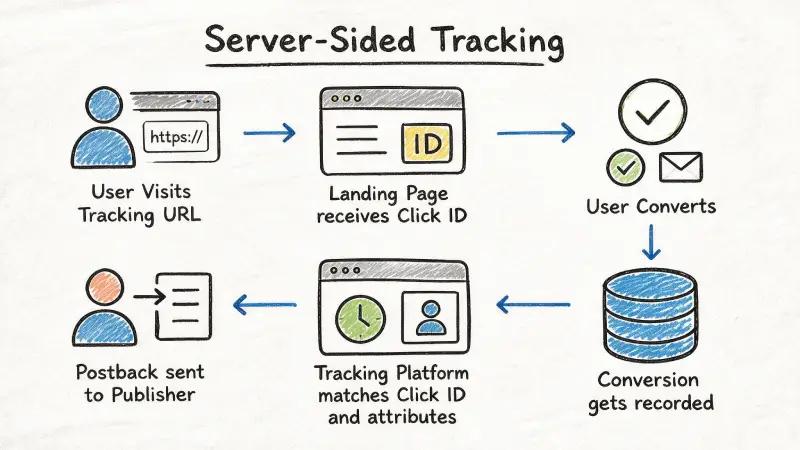
Instead of relying on cookies, server-side tracking records all user data (time of click, offer, publisher, IP address) in a database. Every attribution system stores this data for correct attribution at the conversion event.
Step 1: A user clicks on a tracking link.
Step 2: The tracking system passes a Click ID to the redirect URL/landing page. This parameter (e.g., myshop.com/?click_id=xxxxxxx) is used to attribute the conversion to the right publisher. Each Click ID is a unique string that cannot repeat.
Step 3: The user performs a signup/purchase that triggers a server-to-server postback to the tracking system. This includes the Click ID received on the landing page. Because this is executed from the backend, it cannot be manipulated.
Step 4: An optional publisher postback is sent, allowing the publisher to receive conversion data without relying on the advertiser. Server-sided tracking is more reliable and more privacy-friendly as only first-party data is used.
Implementing Server-Side Tracking#
For server-side tracking to work, you need: a tracking platform that supports cookieless/server-sided tracking, access to the landing page, and access to the backend where conversions are recorded.
Step 1: Passing the Click ID to the Landing Page#
Pass the Click ID (often called Transaction ID) to the landing page as a URL parameter. The parameter can be named anything as long as it does not conflict with existing parameters.

Step 2: Storing the Click in a First-Party Cookie or Database#
Place a small JavaScript snippet on the landing page that reads the click_id parameter from the URL and stores it in a 30-day first-party cookie.
(function() {
  const p = new URLSearchParams(location.search).get('click_id');
  if (p) {
    const d = new Date();
    d.setTime(d.getTime() + 30*24*60*60*1000);
    document.cookie = `click_id=${encodeURIComponent(p)}; expires=${d.toUTCString()}; path=/`;
  }
})();
Step 3: Triggering the Conversion Event#
Read the cookie value on the backend and pass it to the tracking system via a GET request when the conversion event completes. This requires backend engineering support but is straightforward to implement.
import os
import requests
from http.cookies import SimpleCookie

# Example: Read cookie from environment (WSGI-style)
cookie_header = os.environ.get('HTTP_COOKIE', '')
cookie = SimpleCookie()
cookie.load(cookie_header)

click_id = cookie.get('click_id')
if click_id:
    click_value = click_id.value
    url = f"https://your-tracking-endpoint.com/?transaction_id={click_value}"
    response = requests.get(url)
    print("Status:", response.status_code)
else:
    print("click_id not found in cookies.")
Step 4: Triggering the Postback to a Publisher#
Configure your tracking platform's postback/pixel management to send the publisher's Click ID when a conversion is recorded. Platforms typically allow sending additional data like sub-ID parameters, user agents, or device IDs.

Step 5: Manual Testing#
Perform manual tests before implementing with partners. This process teaches how to communicate with partners about data requirements and enables efficient campaign tracking setup.
Common Pitfalls and How to Fix Them#
Click IDs not passed: Test the tracking link using a redirect checker tool to verify parameters are passed at each step.
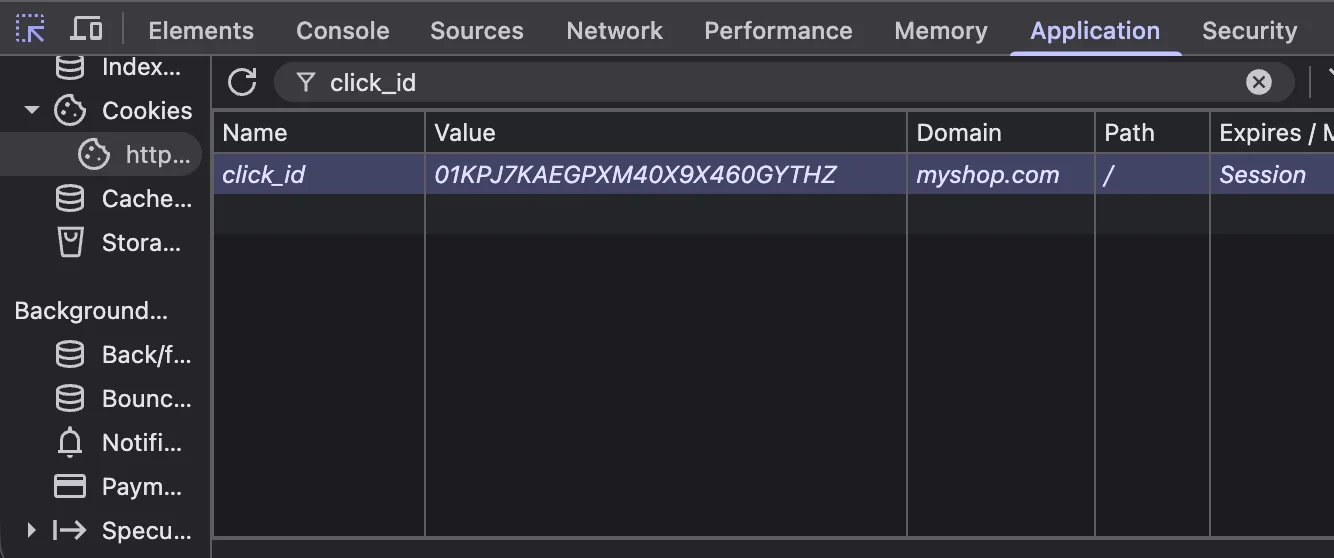
Landing page script issues: Verify cookie content via browser DevTools > Application > Cookies and filter by the cookie name.
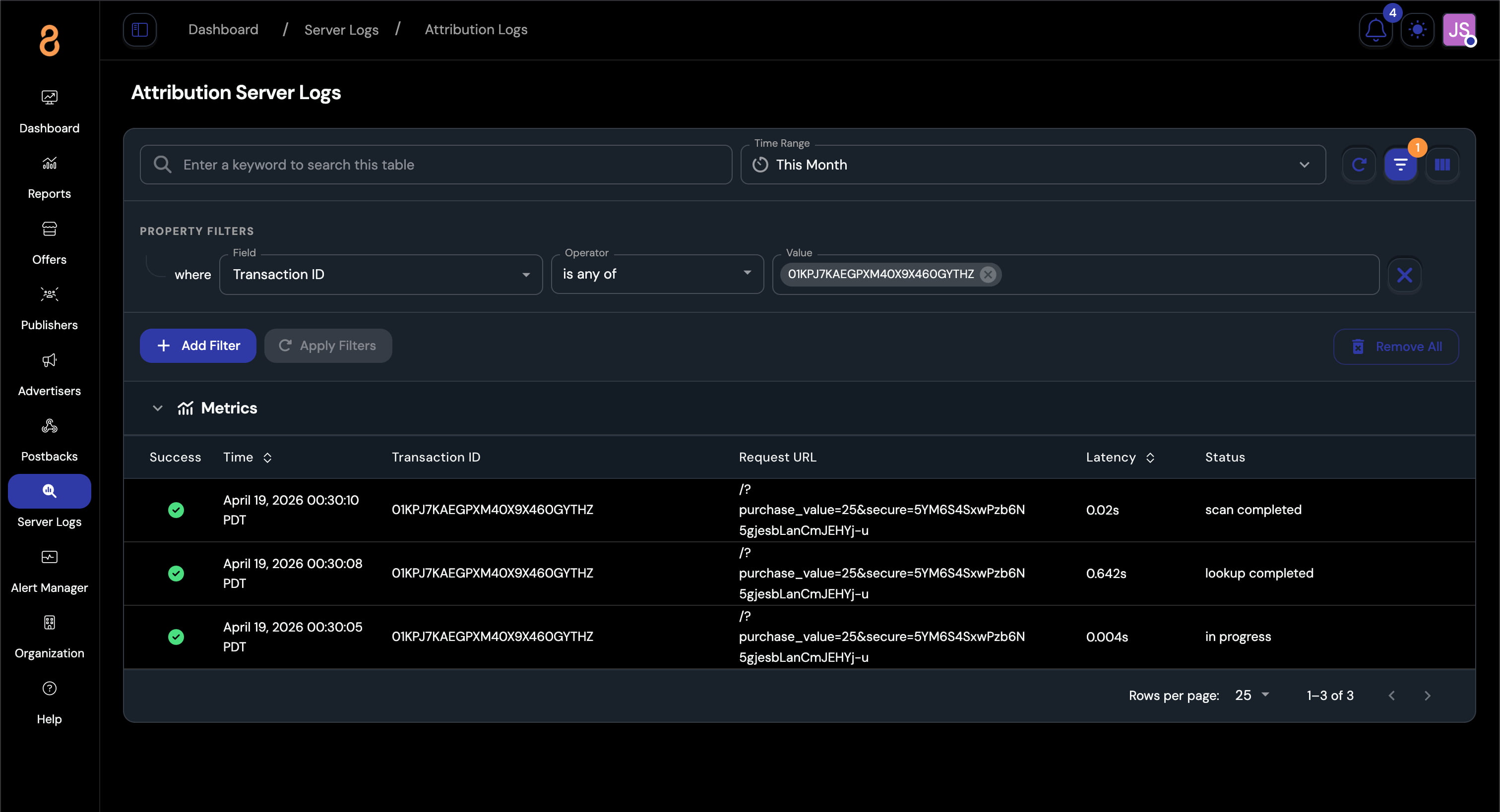
Server log debugging: Check your tracking platform's server logs for errors. A common case is the Click ID being sent to an incorrect parameter or the value being empty.
Conclusion#
Server-side tracking is crucial for modern advertisers seeking accuracy, compliance, and reliability. By 2025, this approach has become the default due to its straightforward implementation and effectiveness. Transitioning is feasible with minimal adjustments. Consider exploring server-side tracking further or contact our team at Integr8 for guidance.